On any given afternoon in the displacement camps of central Gaza, smoke rises from improvised stoves: bricks stacked in circles, broken cookware balanced over open flames. These are not official operations. Some of them are by NGO, but we targeted camps overlooked by those NGOs.
They begin with what little people have: a bag of rice, a tin of tomato paste, a handful of lentils. What makes them powerful isn’t the quantity. It’s the cooperation. Women coordinate cooking shifts. Teenagers gather firewood. Children help wash pots with cold water and ash.
During one particularly difficult week, D4P stepped in quietly to support one such kitchen. Supplies were short, and demand was growing. We didn’t build anything new. We didn’t set up banners or stations. We just brought what was needed—rice, salt, oil, and water—and left the rest to the community.

A volunteer stirs a steaming pot of rice in a Gaza community kitchen, part of a grassroots effort to feed displaced families.
The kitchen fed hundreds. No lists. No registration. Just food shared from one pot, one ladle at a time. The fire stayed lit all day. When it burned low, someone brought more wood.
The kitchen gave people something to rely on something more dependable than announcements or trucks that may or may not arrive.
For displaced families who have lost control over almost every part of their lives, the kitchen gives them back one thing: the ability to nourish each other.
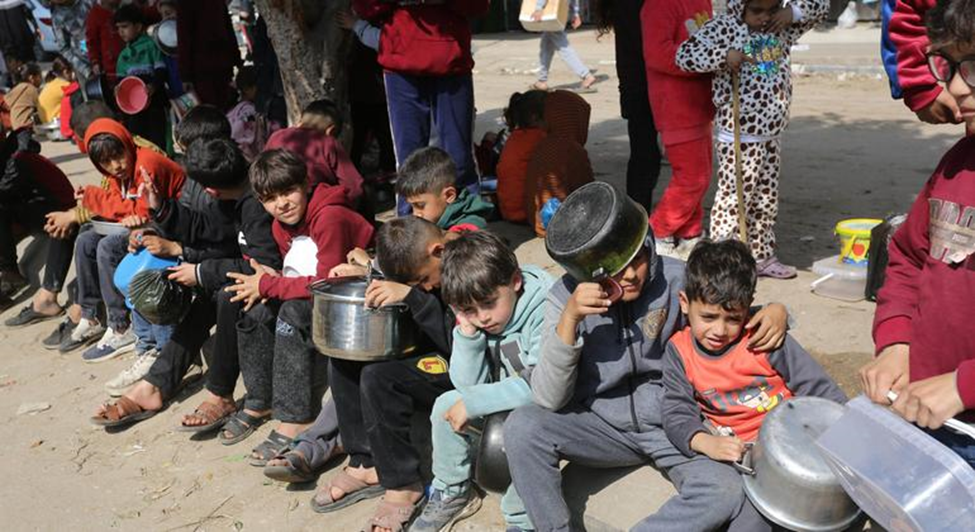
Displaced children in Gaza sit patiently with empty pots in hand, waiting for a chance to receive a meal. In the face of hunger and hardship, their quiet endurance speaks volumes about the daily struggle of survival.
D4P believes in the power of local solutions. We support when asked. We amplify when needed. But we never interfere with what the community already does well.

Inside a community kitchen in Gaza, volunteers from the Dignity for Palestinians campaign (sponsored by Nonviolence International) prepare hot meals for displaced families. Beneath a makeshift tent, every pot, every foil-wrapped portion, is a symbol of solidarity and care amidst crisis.
These kitchens are not permanent. They move when danger comes close. They grow when supplies are available. They pause when there’s nothing left to cook.
But they always come back. Because in Gaza, where so much has been taken, the one thing people still insist on is feeding their kids.
 Dignity for Palestinians Campaign
Leave a comment